


Skandamaata

SkandaMaata – Lalita Devi
🌷 Prardhana Slokam:
simhasanagata- nityam padmaashrita-karadva yaa
shubhadaasta- vu sadadevi skandamaataa- yashasvinee
🌷 Alankaaram: Lalita Devi – Kanakambam Colour
🌷 Prasadam: Curd Rice
🌷 Ashtottaram: CLICK HERE
🌷 History:
The fifth form of Maa Durga is popularly known as Skanda Mata. Skanda is another name for Kumaraswamy, also known as Kartikeya. In the famous battle between the Devas and Asuras, he led the armies of the Gods. The Puranas refer to him as Shaktidhara and describe his glory. He is associated with the peacock as his vehicle.
Goddess Durga, being the mother of Lord Skanda, is worshipped in this fifth form as Skandamata. Goddess Durga is worshipped as Skandamata on the fifth day of the Navaratri festivities.
🌻 Practice:
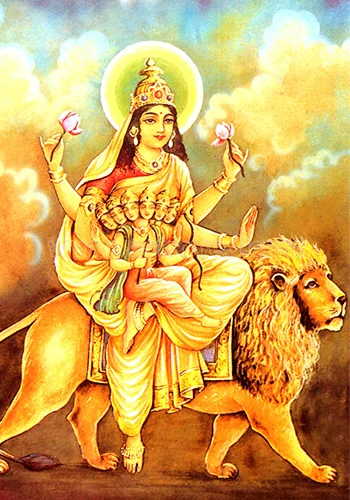
On this day, the mind of the seeker is focused on the Vishuddha Chakra. In her divine form, Skandamata holds the child Skanda on her lap. She is depicted as Chaturbhuja, meaning four-armed. One of her right hands holds Skanda, while another holds a lotus. One of her left hands is in the Abhaya Mudra, offering protection and reassurance, while the other holds a lotus.
The Goddess is radiant and white in appearance. She is seated on a lotus, which is why she is also known as Padmasana. She is also associated with the lion as her vehicle.
Worship on the fifth day of Navaratri holds special significance. The scriptures praise the greatness of this sacred worship.
When the devotee focuses the mind on the Vishuddha Chakra, worldly tendencies and mental distractions gradually subside. The seeker progresses towards pure consciousness and becomes free from worldly attachments. During meditation, devotees contemplate Skandamata seated on the lotus and practise worship with complete attention and devotion.
By worshipping Skandamata, devotees believe that their wishes will be fulfilled and that they will experience peace and happiness. Her blessings are associated with spiritual liberation, and the path to Moksha is believed to open for those who worship her with sincere devotion.
A special feature of Skandamata worship is that devotees worship both the Goddess and her child, Lord Skanda. Therefore, devotees are encouraged to perform her worship with particular care and reverence.
The Goddess is also associated with divine radiance and spiritual brilliance. Her devotees believe that her transcendental aura surrounds and protects them, supporting their well-being at every moment.
Therefore, devotees should meditate with pure minds and seek refuge in Skandamata. Sincere devotion to the Goddess is believed to help overcome sorrow, find inner peace and attain spiritual liberation.
🌹 🌹 🌹 🌹 🌹


